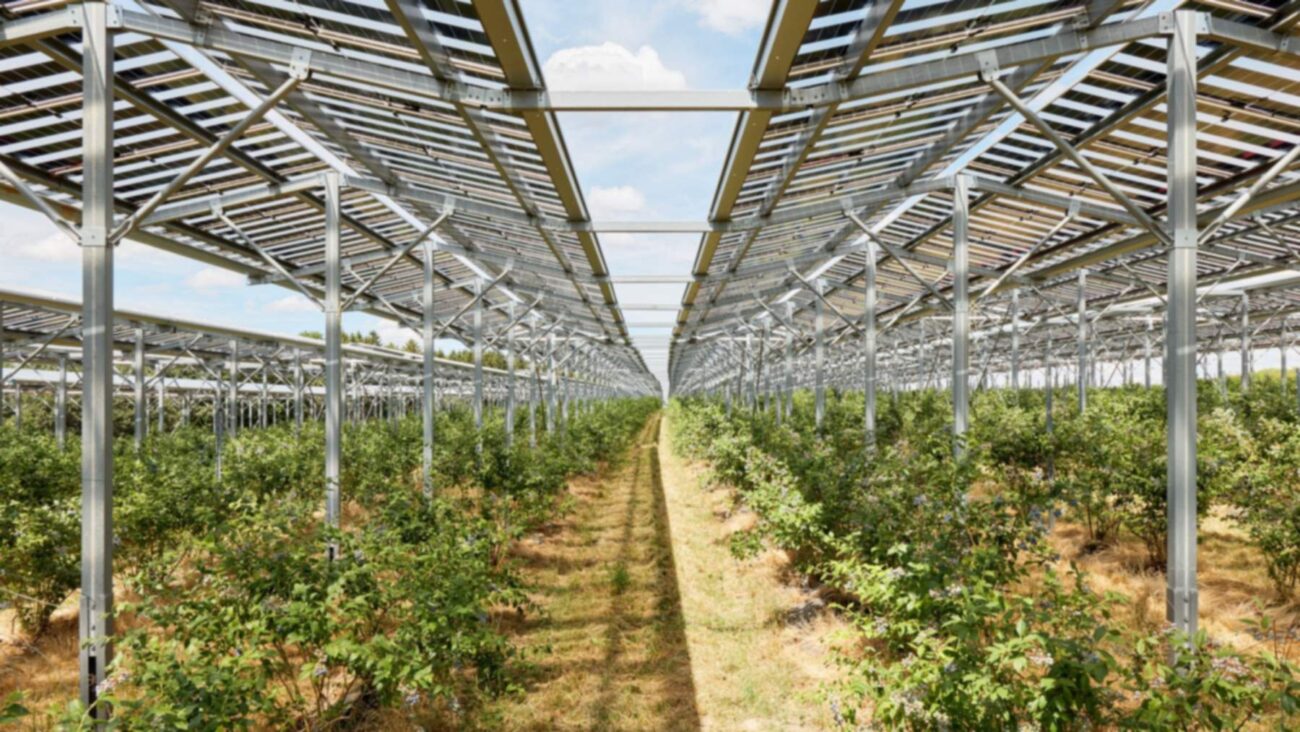
Olivier Pichonnat, a farmer in Switzerland, has been dealing with some pretty tough luck when it comes to his organic blueberry crops. He’s had to contend with frost, too much rain, hail, and drought, which has resulted in some significant losses. To mitigate these risks, he’s partnered with a utility company called Romande Energie to install a roof made of 5,220 solar panels over his 4.4-acre field. This innovative approach is called agrivoltaics, where food is grown and solar power is generated on the same piece of land.
The solar panels are mounted 10.5 feet off the ground, which allows Pichonnat to continue using his usual farming equipment, including a mechanical harvester. The height of the panels was determined by the need to accommodate the tallest machine on the farm. The project, which is the largest of its kind in Switzerland, was completed in the spring and has already shown promising results. The utility company reports that the growing conditions under the panels held up four weeks longer than those outside, and the bushes underneath the panels stayed healthy and didn’t require irrigation.
The data on the effectiveness of the solar panels is still limited, but it suggests that they can provide some protection for the crops. In a trial conducted in Italy, blueberry bushes under solar panels produced 1% more fruit over a two-year period compared to those under hail nets. While the results are not dramatic, the panels seem to provide a kind of insurance for the crops, reducing the risk of losses due to extreme weather conditions. The utility company is responsible for maintaining the solar panels and selling the electricity generated, while Pichonnat gets to keep his crops safe and receives a second source of income.