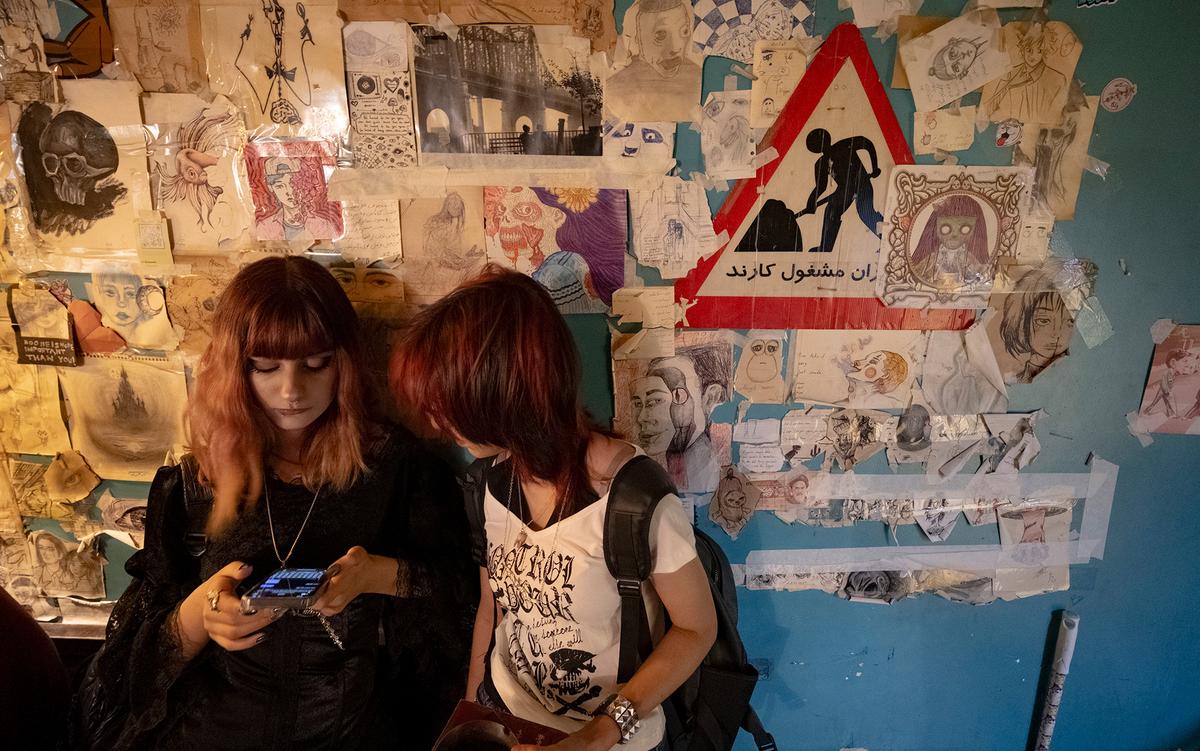
In Tehran, a new fashion hub has emerged on Iranshahr Street, where young people gather to show off their latest styles. Women like Yasaman, who sells manga-inspired drawings, have ditched their headscarves and manteaus for trendy outfits, embracing a newfound freedom. This shift is not just about fashion, but about a quiet rebellion against the Islamic Republic’s strict rules. The morality police, who once enforced the hijab law with fines and imprisonment, have largely disappeared from the streets, and women are taking advantage of this newfound leniency.
The change in Tehran’s streets is a result of a series of events, including the death of Mahsa Jina Amini in custody and the subsequent Woman, Life, Freedom protests. The government’s response to these protests, which included arrests and executions, only fueled the movement. Now, women like Mina and Sima are embracing their freedom to dress as they please, without fear of reprisal. They see this as a personal choice, not a political statement, and are simply living their lives as they want to. This “art of presence” is a form of soft power, where ordinary people change their society by living as they wish, without formal organizations or conventional political movements.
The Iranian government is struggling to respond to this new reality, as it tries to balance its desire to maintain control with the need to avoid sparking further protests. The morality police have changed their tactics, targeting cafes and social media accounts instead of individual women. However, the state’s authority is slowly eroding, as more and more people defy its rules and live their lives as they please. This quiet rebellion is not a traditional movement, but a non-movement, where ordinary people trigger social change through their everyday actions. As the Iranian sociologist Asef Bayat notes, this is a form of change from below, where the power of big numbers and the ordinariness of small escapes allow people to quietly accrete and create a new reality.