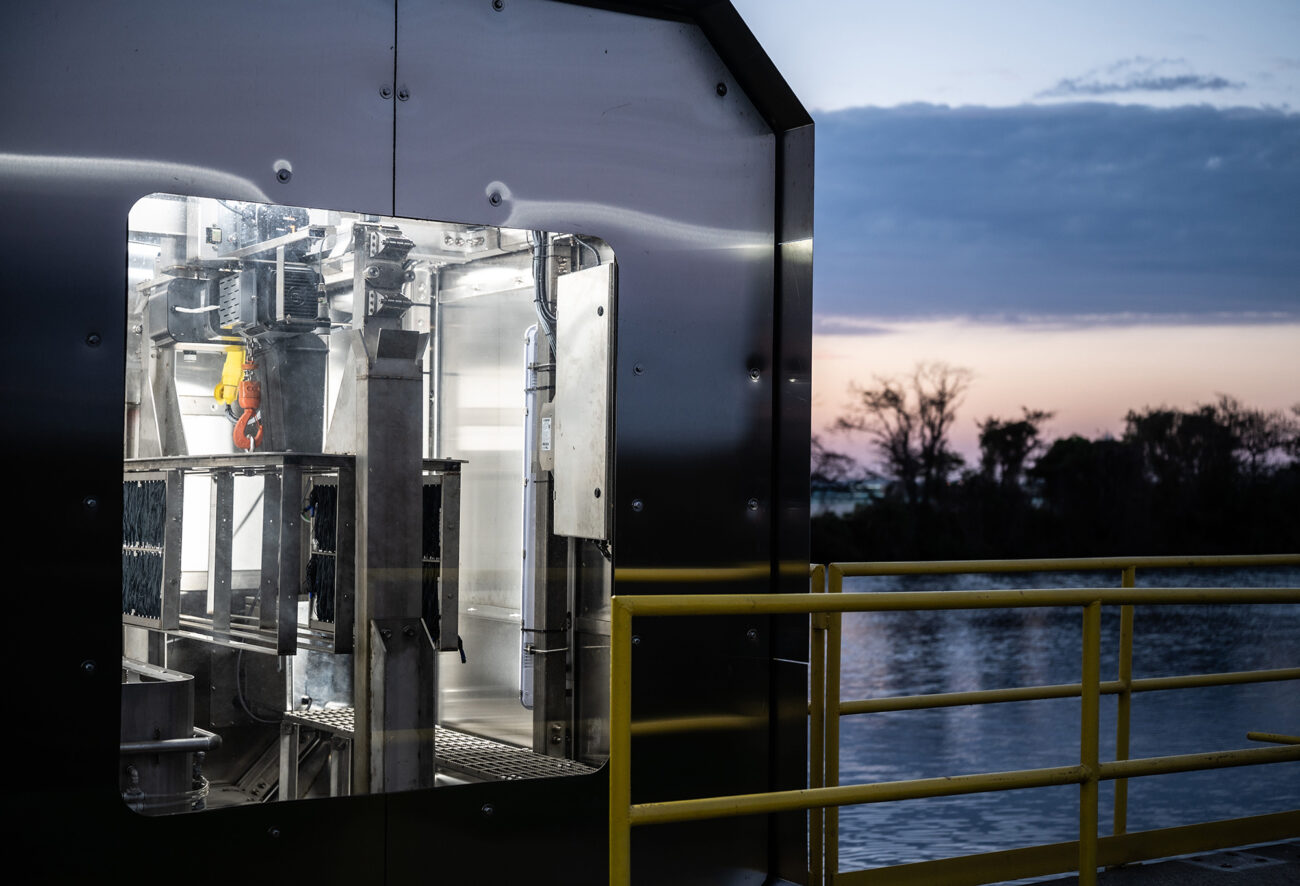
The Atlantic County Utilities Authority in New Jersey is trying out a new way to remove microplastics from its wastewater treatment plant. Microplastics are tiny pieces of plastic that don’t break down and can harm the environment and our health. The technology, designed by a startup called PolyGone Systems, uses a special material that microplastics stick to, making it easy to remove them from the water. This is a big deal because right now, there are no rules requiring wastewater treatment plants to remove microplastics, and they can end up in our oceans and even in the fish we eat.
The PolyGone system is the first of its kind in the world and was installed after a two-year pilot program. The founders of PolyGone, Nathanial Banks and Yidian Liu, are former Princeton University students who were inspired by plants in wetlands that can trap microplastics. Their system has been shown to remove over 98% of microplastics in a lab setting, and they’re confident it will work just as well in the real world. The best part is that it’s energy-efficient and uses minimal materials, making it a scalable solution for wastewater treatment plants.
The removal of microplastics is important because they can harm human health, even if we don’t fully understand the risks yet. Researchers have found microplastics in our bloodstream, brain tissue, and other organs, and some think it could increase the risk of heart attacks or strokes. The Atlantic County Utilities Authority is taking a proactive approach by installing this new technology, and PolyGone’s founders are already working on scaling it up for other wastewater treatment plants and even residential use. It’s a promising solution to a big problem, and it’s exciting to see innovation like this happening in our region.