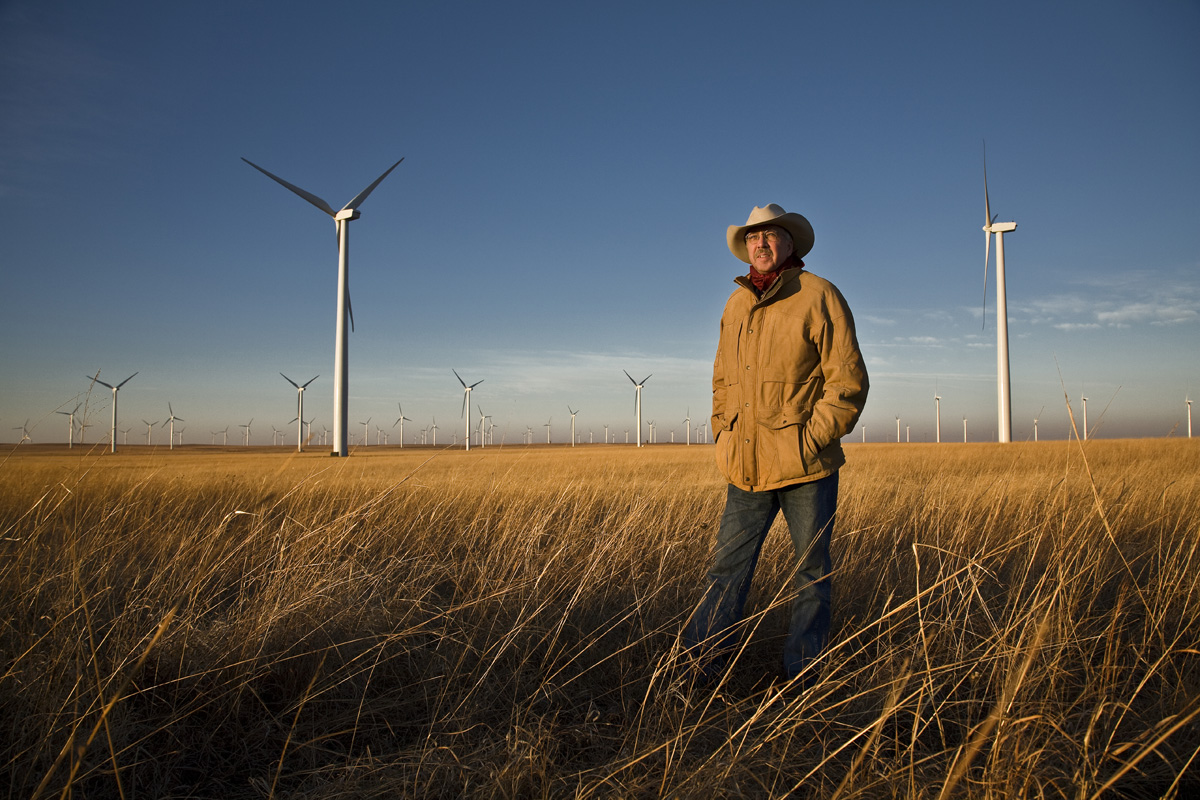
Pete Ferrell’s family has been running a 7,000-acre ranch in Kansas for four generations, and they’ve been using renewable energy from the start. Back in 1923, Ferrell’s great-grandfather installed a wind turbine to power their home, and today they have 50 large turbines on their land as part of the Elk River Wind Project. The royalties from wind power have been a game-changer for the family, providing a steady income and helping them keep the ranch intact.
The wind farm has been a huge success, generating enough energy to power 60,000 homes and bringing in a significant income for the Ferrells. In fact, wind power has become their “best cash crop,” providing a consistent source of revenue even during droughts. Ferrell has become an advocate for wind energy, joining the board of Renewable Energy Farmers of America and helping other farmers and ranchers navigate the process of leasing their land for wind projects. He’s seen firsthand how wind energy can provide security and survival in an uncertain rural economy.
Despite the benefits of wind energy, there are still many challenges and misconceptions. Some people claim that wind turbines harm wildlife, but the data shows that they actually have a relatively small impact compared to other human activities. Ferrell has also faced opposition from both environmentalists and fossil fuel interests, but he’s convinced that the economic benefits of wind energy will ultimately win out. For him, wind power is a way to ensure the long-term viability of his family’s ranch and to pass it down to the next generation without financial burden.