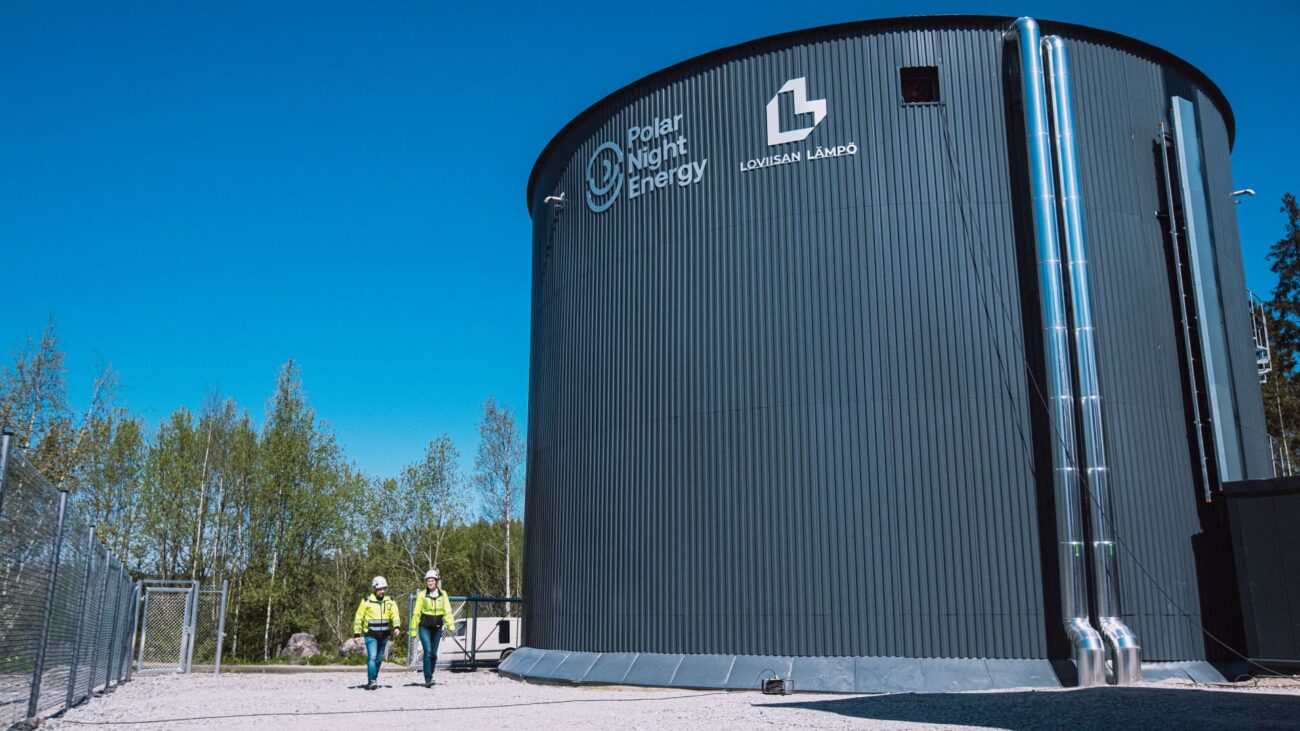
A small town in Finland has come up with a genius solution to store clean energy – a massive sand battery. The battery, which is 13 meters tall and 15 meters wide, uses 2,000 metric tons of crushed soapstone to store heat energy. This means it can provide enough heat for the town’s 5,000 residents for almost a month during the summer and about a week during the winter. The best part is that it’s reducing the town’s greenhouse gas emissions by a whopping 70% and cutting down on the use of wood chips by 60%.
The sand battery works like a giant thermos, storing heat energy when there’s plenty of wind or solar power available. This heat is then used to warm water for the local district heating network when it’s needed. The company behind the project, Polar Night Energy, says that this technology has the potential to play a big role in cutting emissions globally. In fact, they’ve already been contacted by teams from every continent, particularly from communities that are still reliant on fossil fuels. The beauty of this technology is that it doesn’t require rare earth materials like lithium-ion batteries do.
The sand battery is a game-changer for renewable energy, which is often criticized for being intermittent. It can store energy for long periods of time, unlike traditional batteries, and can be charged when electricity is cheap. This means that it can help smooth out the ups and downs of renewable energy production, making it a more reliable source of power. Experts are already predicting that this technology will be replicated globally, and it’s not hard to see why – it’s a simple, effective, and sustainable solution to one of the biggest challenges facing renewable energy today.