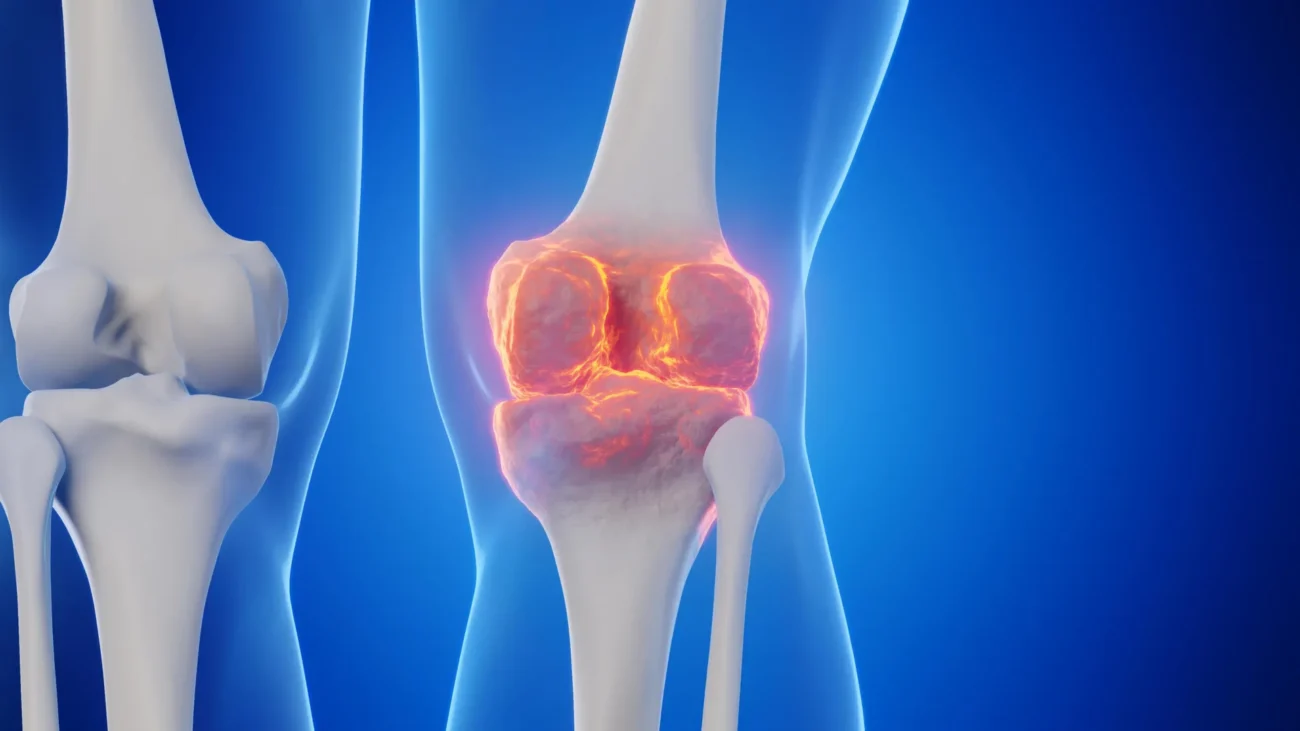
Scientists have made a breakthrough in restoring cartilage in aging knee joints by blocking a protein that increases with age. In a study on mice, the approach not only reversed natural cartilage loss but also protected them from developing arthritis after knee injuries. The findings also showed promise in human tissue, with cartilage samples from knee replacement surgeries responding to the treatment by producing new, functional cartilage. This suggests that cartilage damaged by aging or arthritis may be more capable of repair than previously thought.
The study focused on a protein called 15-PGDH, which becomes more abundant with age and contributes to the gradual loss of tissue function. By blocking this protein, the researchers were able to increase muscle mass and endurance in old mice, and also promote regeneration in damaged muscle, nerve, bone, and blood cells. In the case of cartilage, the treatment caused existing cartilage cells to change their patterns of gene activity and shift towards a more youthful state, rather than relying on stem cells. This led to the regeneration of hyaline cartilage, the smooth articular cartilage needed for healthy joint movement.
The researchers are excited about the potential of this approach to lead to an oral medicine or injection that regenerates cartilage and reduces the need for knee or hip replacement surgery. While the findings are promising, clinical trials are still needed to determine whether the treatment is safe and effective for patients. An oral 15-PGDH inhibitor has already reached clinical testing for muscle weakness, and the researchers hope that a similar trial will be launched soon to test its effect in cartilage regeneration. If successful, this could be a game-changer for the millions of people who suffer from joint pain and swelling as they age.