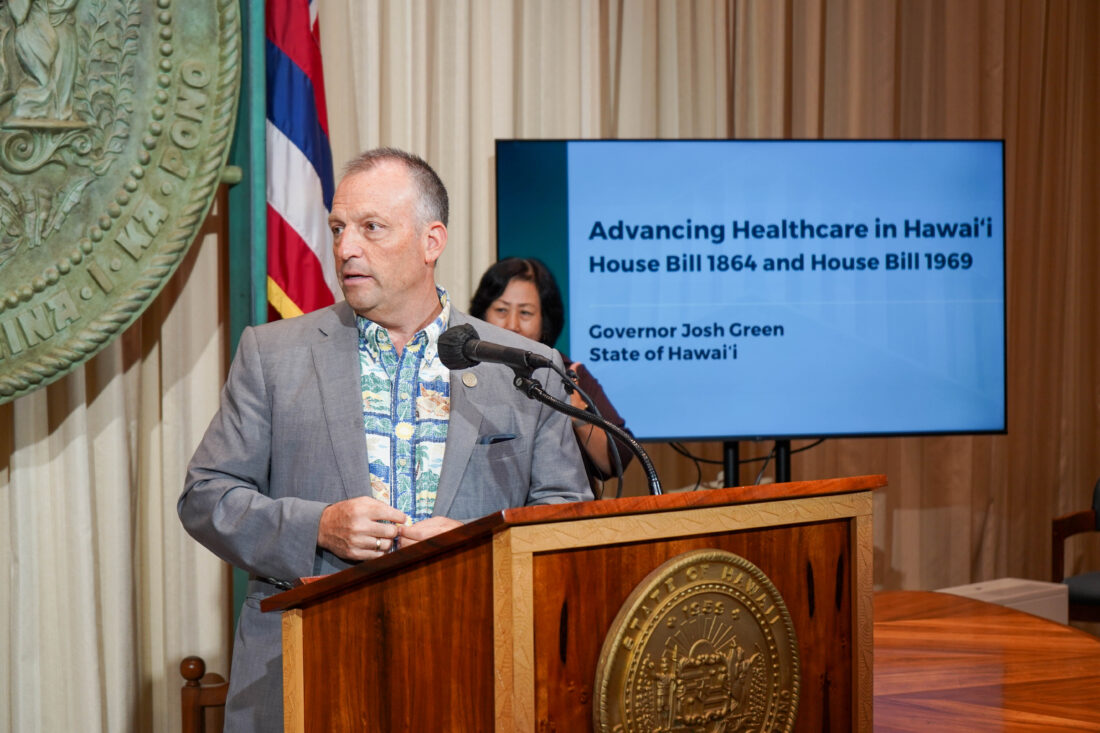
Gov. Josh Green signed three health measures into law on July 9 aimed at expanding care and creating a state program to forgive medical debt. The package includes new insurance rules for fertility preservation, financial help for colorectal cancer screenings, and a Medical Debt Acquisition and Forgiveness Program to cancel qualifying bills.
One bill (Act 218) requires insurers to cover standard fertility preservation for patients facing medically necessary treatments that could cause infertility — think chemo, radiation or certain surgeries — and applies to policies issued or renewed after Dec. 31, 2026; Hawaii will be the 22nd state with this requirement. Another (Act 219) directs the Department of Human Services to provide financial assistance for colorectal screening for people who are uninsured, underinsured or ineligible for Medicaid, and forces some plans to cover necessary follow-up colonoscopies after a positive screen with no deductibles, copays, or coinsurance; colorectal cancer is the state’s second-leading cancer killer, about 260 deaths a year.
The debt bill (Act 220) sets up a program under the Office of Wellness and Resilience to partner with nonprofits to buy outstanding medical debt for a fraction of its value and cancel it, potentially wiping out as much as $91 million for up to 50,000 residents, though it’s subject to available funding. Officials say about 1 in 20 Hawaiians has medical debt on their credit report; people won’t apply — if their debt is purchased and erased they’ll just get a notice. Supporters called it a major step to prevent medical bills from wrecking families’ finances, noting estimates that a relatively small state investment could cancel huge amounts of debt.