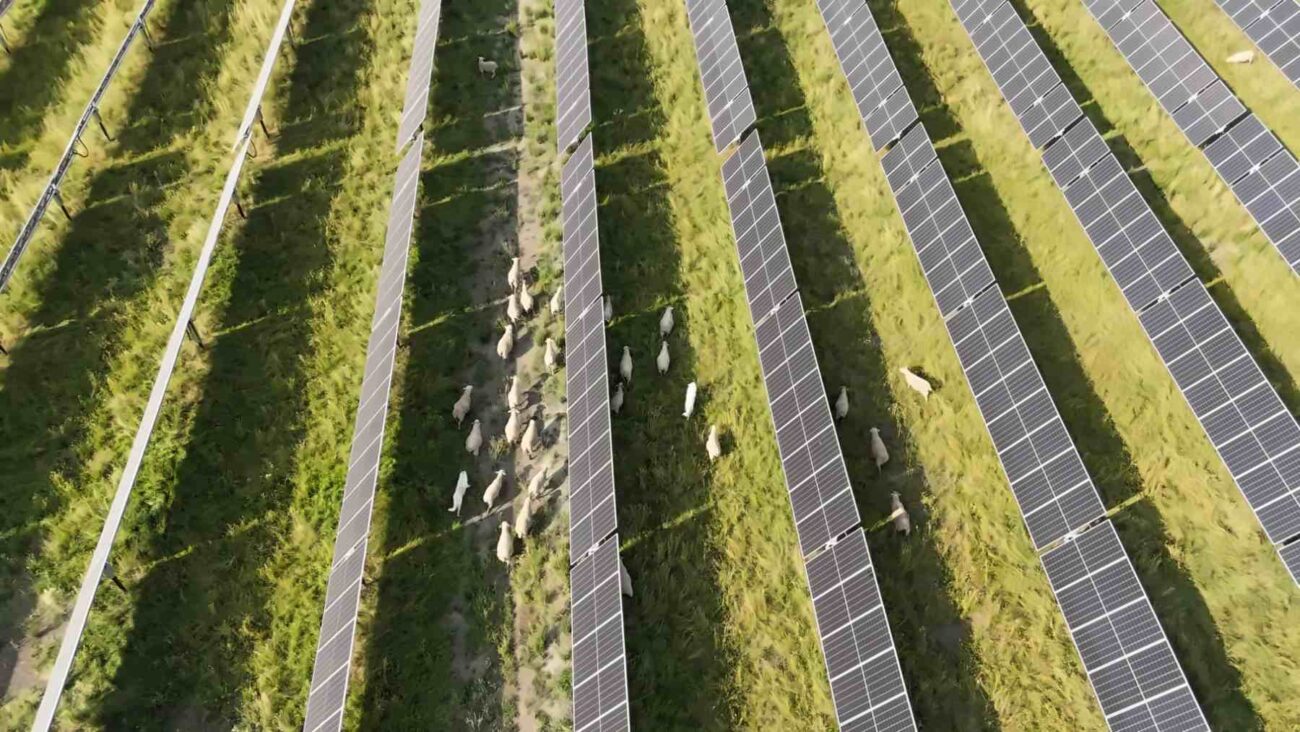
A solar farm in Alberta, Canada, has been making headlines for its unique approach to farming and energy production. The Sollair Energy Project, owned by General Land & Power, is a 75-megawatt solar farm that also hosts a farm with 260 sheep, over two million bees, and a hay crop. The project has been touted as an example of “agrivoltaics,” where the same land is used for both farming and energy production. Despite initial concerns from neighbors and the City of Airdrie about the loss of productive farmland, the Alberta Utilities Commission approved the project, citing its potential to mitigate the loss of farmland.
The project’s farming operations have undergone some changes since its initial proposal. Originally, the plan was to use 377 acres for sheep grazing and 176 acres for crops and forage. However, the current setup has the sheep occupying about 60 acres, while the company can seed and cut hay on around 400 acres. The company claims that farming the land helps to reduce labor, equipment, and fuel costs, and that it’s a way to protect the long-term value of the land. The owner, Mark Owerko, has stated that the company’s goal is to eventually grow higher-value grain crops on the land.
The project’s success has sparked interest in the potential for similar projects in Alberta. While the regulatory environment has been challenging, with a moratorium on new renewable energy approvals and strict rules around farming on high-quality land, General Land & Power believes that its project can serve as a template for others. The company has already hosted tours for other developers and is willing to share its knowledge and experience. The project’s ability to produce both energy and food has made it a notable example of agrivoltaics in action, and its success could pave the way for more innovative approaches to land use in the future.