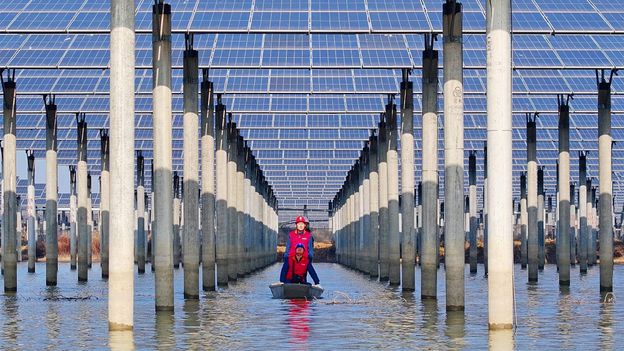
Solar power is taking over the world, and it’s happening faster than anyone expected. Just a decade ago, solar power accounted for only 1% of the world’s power, but by 2026, it’s expected to reach 10% and overtake nuclear power. In fact, according to statistics from the UK-based energy think tank Ember, solar electricity generation has already surpassed nuclear power, producing 13% more power over the past 12 months.
There are several reasons for solar’s success, including its decreasing cost. Solar has become the cheapest electricity in history, with panel prices falling to record lows. This has led to a surge in installations, with countries like China, the US, and India leading the way. In the US, for example, enough solar has been installed to power over one-third of its households. Additionally, solar is providing new electricity in places where fossil-based grids can’t keep up with demand, such as in Pakistan and Lebanon.
The future of solar looks bright, with the International Energy Agency predicting that solar power generation will reach double its 2025 levels by 2030. Solar is also expected to play a key role in the push towards electrification, reducing fossil fuel use in areas like transportation. While there are still challenges to overcome, such as integrating solar into the wider electricity system and addressing storage issues, the progress made so far is a hopeful sign for the future of renewable energy.