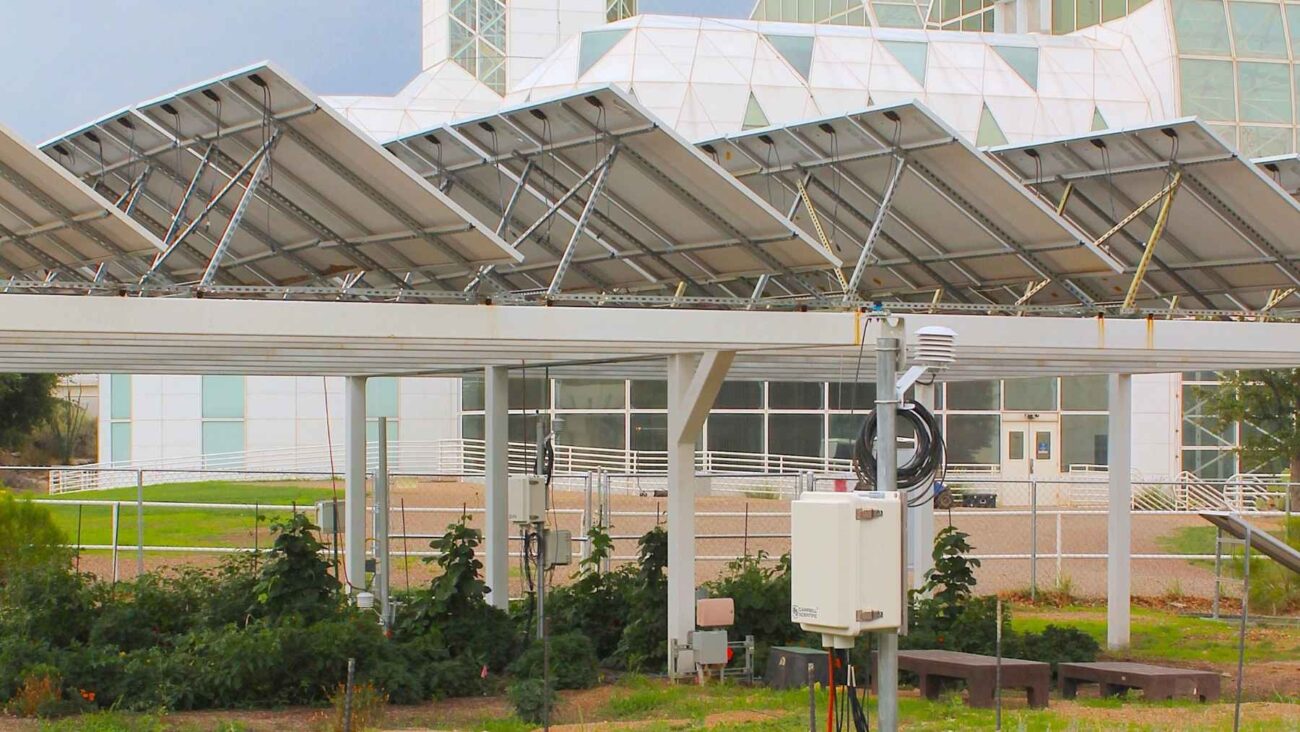
Solar panels are often installed in places where they’re not really wanted, like over canals or on farmland. But a research team in Arizona has found a way to make them more useful – by building them on stilts above crops. This way, the same land can be used for both farming and generating electricity. The shade from the panels also helps keep the soil cool and the plants happy, which is especially important in hot desert climates.
The practice of growing crops under elevated solar panels is called agrivoltaics, and it’s not a new idea. But the Arizona team has been studying it extensively and has found some impressive results. For example, they’ve discovered that the shade from the panels can help retain moisture in the soil, reducing the need for watering by more than half. They’ve also found that certain crops, like cowpea, actually produce higher yields when grown in the shade. And as an added bonus, the plants help cool the solar panels themselves, making them more efficient.
The benefits of agrivoltaics go beyond just the environment and agriculture, though. The shade provided by the panels can also help protect farmworkers from the heat, which is a major hazard in the US. In fact, crop workers are 20 times more likely to die from heat-related illnesses than other workers. The Arizona researchers have found that the skin temperature of workers under the panels can be up to 21 degrees cooler than those working in the open sun. With heat waves becoming more frequent and intense, finding ways to keep farmworkers safe is becoming increasingly important. And agrivoltaics could be a key part of the solution.