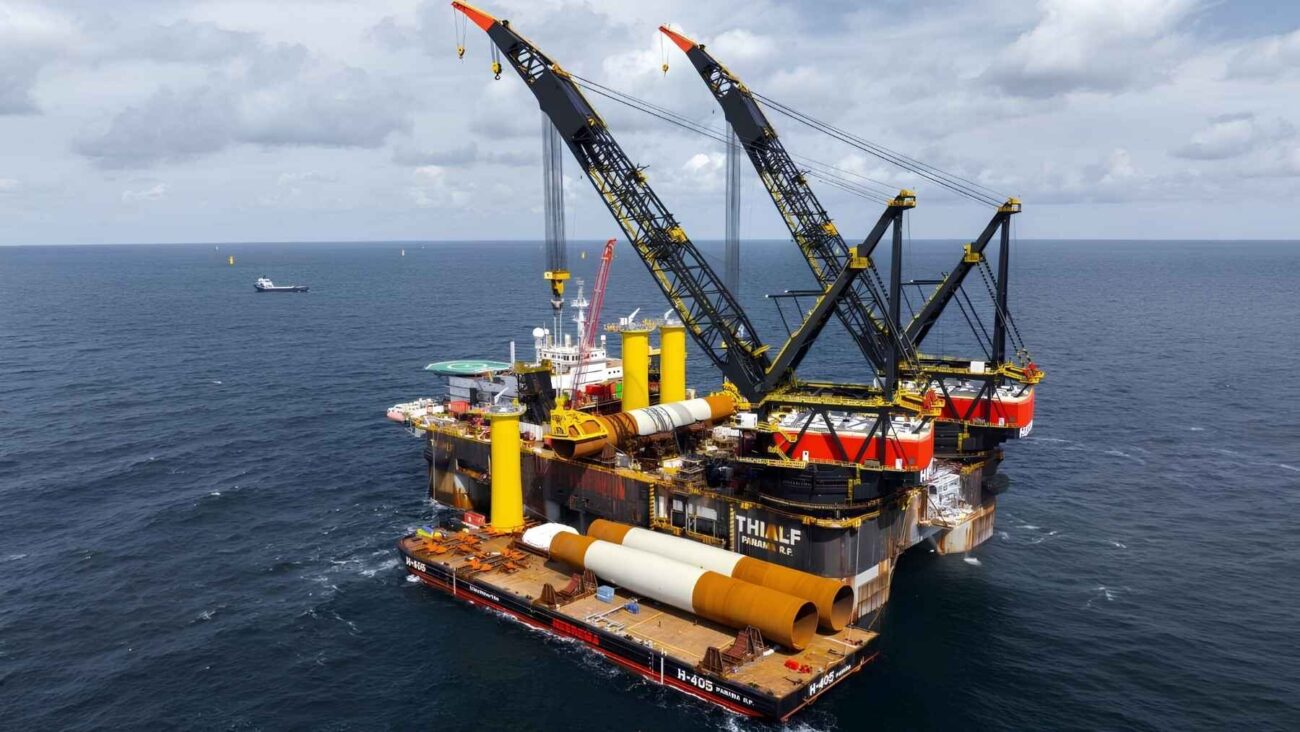
New York City is one of the most energy-hungry places on the planet, and to meet its demands, a massive wind farm called Empire Wind 1 is being built southeast of Long Island. The project involves installing 54 giant steel cylinders, known as monopiles, on the seafloor to support the wind turbines. These monopiles are changing the underwater landscape, adding a hard surface to what was once a flat, sandy environment.
Researchers from Taiwan have been studying the effects of similar wind farms on the marine ecosystem, and their findings are pretty interesting. They’ve discovered that the monopiles are attracting a huge variety of fish species, with 86 species found within 50 meters of the structures. This is because the hard surface of the monopiles provides a home for species like mussels, barnacles, and anemones, which can’t survive on soft sand. These species then attract crabs, small fish, and even larger predators, creating a mini ecosystem around the wind turbines.
The study’s findings have implications for the Empire Wind 1 project, as well as other offshore wind farms around the world. While the artificial structures can increase local biodiversity, they can also alter fishing patterns and favor certain species over others. To fully understand the effects of the wind farm on the marine ecosystem, scientists will need to conduct further studies and observations over several years. They’ll be using techniques like diver surveys, underwater imagery, and commercial trap studies to gather data and compare the results with sandy reference areas. Only time will tell if the Empire Wind 1 project will have a positive or negative impact on the local ecosystem.