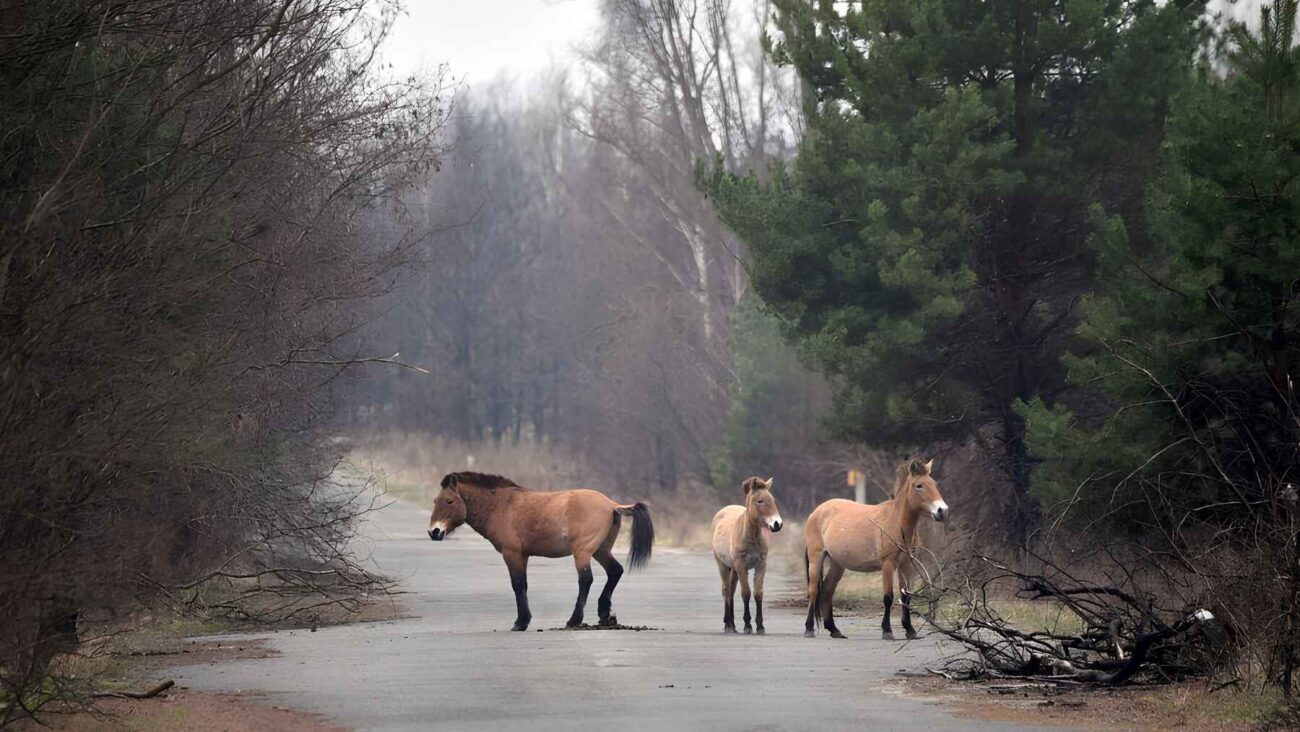
The Chernobyl exclusion zone has become an unlikely wildlife refuge, with animals like wolves, lynx, and deer thriving in the area. This is largely due to the absence of human activity, such as farming and settlement, which has allowed the landscape to transform into a more natural state. The removal of human disturbance has changed the ecological equation, giving predators more territory and fewer conflicts with humans.
Research has shown that wolf abundance in the area is more than seven times higher than in nearby nature reserves. Camera-trap data has also revealed that mammal diversity and occupancy are highest in the exclusion zone, with species like Przewalski’s horses, Eurasian lynx, and red deer showing high estimated occupancy. This suggests that the exclusion zone has become a haven for wildlife, with many species able to recover and thrive in the absence of human pressure.
However, it’s essential to note that the presence of wildlife in the area doesn’t mean that radiation is harmless or that every animal is healthy. The scientific record is not unanimous, and some studies have reported lower abundance of certain species in areas with higher radiation levels. Additionally, the ongoing conflict in Ukraine has introduced new risks to the landscape, highlighting that Chernobyl is not a frozen laboratory, but a complex and dynamic ecosystem that requires careful consideration and management.