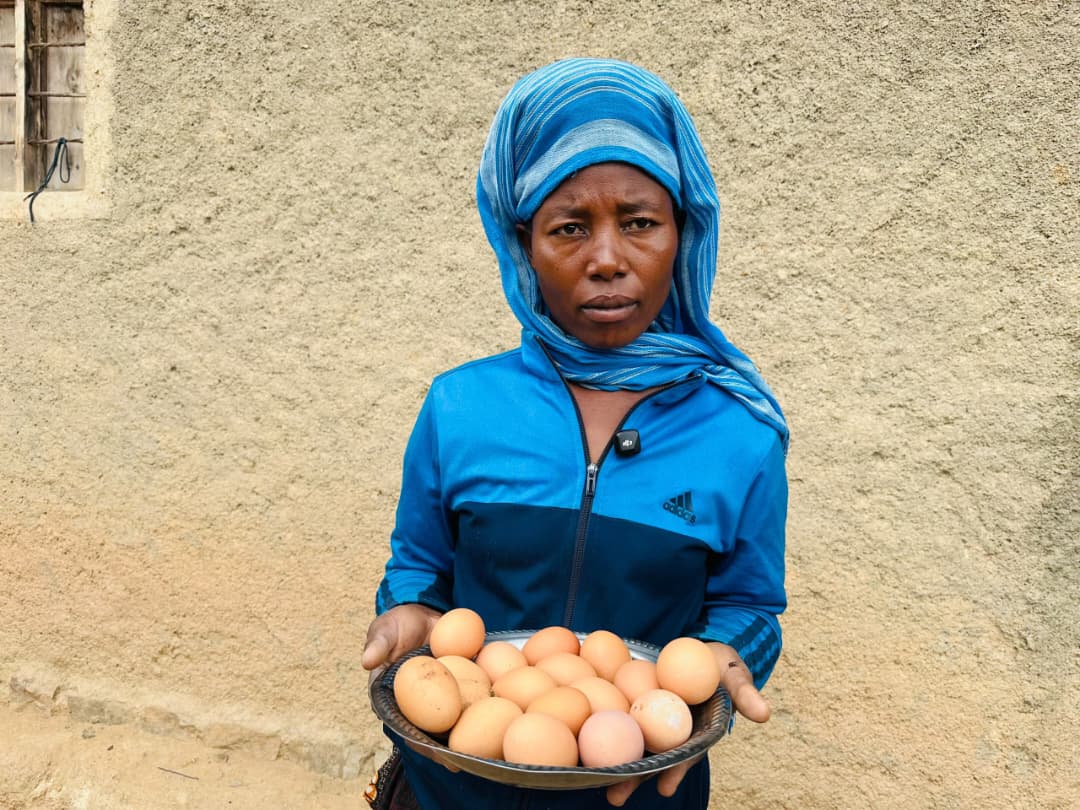
The Second Sustainable Agricultural Intensification and Food Security Project, also known as SAIP II, is making a real difference in the lives of families in Ngororero district. For example, MUSHIMIYIMANA Anne Marie, a mother of three, received four chickens through the project and now has seven, providing her family with a steady supply of eggs. This has been especially important for her child who was suffering from malnutrition, but has since started gaining weight thanks to the increased access to animal products.
The project is not only improving the families’ diets, but also helping them manage their finances better. MUSHIMIYIMANA is now able to sell surplus eggs, generating income that she uses for household needs, including community-based health insurance. Another beneficiary, NDAYAMBAJE Jean Damascene, has also seen the benefits of the project, receiving seeds for vegetables and four chickens for egg production. He’s now sharing his knowledge with other families, helping them prepare nutritious meals for their children.
The project’s impact is being felt across the district, with the prevalence of stunting among children declining from 50.5 percent in 2020 to 35.8 percent in 2026. The district’s vice mayor, MUKUNDUHIRWE Benjamine, attributes this progress to the project’s efforts to change people’s attitudes towards balanced diets and strengthen nutrition interventions at the household level. The project’s nutrition specialist, IMANIMURINDE Evode, emphasizes that continued efforts are needed to sustain the gains and further reduce malnutrition, but the progress made so far is a testament to the project’s effectiveness.